There are two types of strategy games. The first type is the one where you spend more time reading instructions than actually playing. You open the game, see dozens of resources, menus, upgrades, and systems, and immediately wonder if you need a university degree before you can build your first army.
Then there are games like OpenFront. OpenFront looks approachable from the beginning. You don’t feel buried under endless information. You understand the main idea quickly – control territory, grow your position, compete against other players, and try to survive long enough to become a serious threat.
But here’s the interesting part. The longer you play, the more you realize that the game has much more depth than it first appears. That was my experience. When I started playing, I honestly thought I had figured everything out within the first few minutes. I saw the map, saw the available actions, and thought, “Okay, I know how this works.”
A few mistakes later, I realized I absolutely did not know how it worked. And I think that’s a good thing. A strategy game should not reveal every secret immediately. It should give you enough information to begin, then reward you for paying attention and learning from experience.
OpenFront does exactly that. The first thing I noticed was how important every decision feels. In some games, you can make a mistake and recover instantly. Here, a bad decision can create problems several minutes later.
That makes every choice more interesting. Should you expand now or wait?
Should you attack a weaker opponent or prepare for a bigger threat?
Should you spend resources immediately or save them for a better opportunity?
These questions might seem simple, but they are constantly running through your mind while playing.
And honestly, that’s what kept me interested.
My biggest beginner mistake was trying to grow too quickly. I saw empty territory and wanted to claim as much as possible. It felt like progress, and I assumed that a larger area meant I was becoming stronger.
Sometimes it did.
Sometimes it completely backfired.
The problem was that I wasn’t thinking about the consequences. Every new piece of territory created another area I needed to manage. I was spreading myself too thin and giving opponents more chances to attack.
Eventually, I learned something important.
A smaller, well-managed position can be much stronger than a huge territory you cannot protect.
That one idea changed the way I played.
Instead of constantly searching for the next expansion opportunity, I started watching the entire map. I paid attention to what other players were doing. I looked for moments when someone was vulnerable instead of blindly attacking whenever I had the chance.
The game became much more interesting after that.
This is where I think OpenFront works especially well for both beginners and experienced players. New players can enjoy the simple idea of building and expanding, while experienced players can focus on prediction, timing, and reading their opponents.
The difference between those two groups is not the rules.
Everyone knows the rules.
The difference is how they think.
A beginner sees territory.
An experienced player sees possibilities.
They notice patterns. They recognize dangerous situations. They understand that the strongest move is not always the most obvious one.
That’s what gives OpenFront replay value.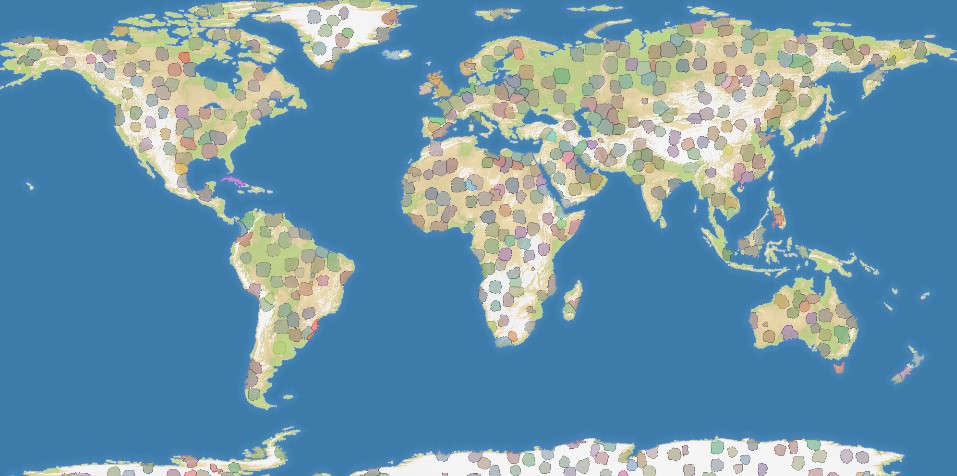
Every match creates a different situation because every opponent thinks differently. You might face someone who attacks immediately and tries to dominate the map quickly. You might face someone who quietly builds power and waits. You might even find yourself in a situation where two stronger players are fighting each other, giving you a chance to grow.
Those moments are where the game shines.
You are not following a script.
You are reacting to real decisions made by real players.
The visual design also helps make the experience enjoyable. Strategy games need clarity, and OpenFront keeps the focus on what matters. You can easily understand the battlefield without feeling overwhelmed by unnecessary details.
Personally, I think that simplicity works in its favor.
A strategy game does not need to look complicated to be complicated.
Sometimes the deepest games are the ones where the rules are easy to understand but the choices are difficult.
That describes OpenFront pretty well.
For new players, I would recommend taking your first matches slowly. Don’t worry if you lose. In fact, losing is probably the fastest way to learn. Every mistake teaches you something useful.
Did you expand too fast?
Did you ignore a nearby threat?
Did you attack at the wrong time?
Those questions help you improve.
For experienced players, the challenge comes from becoming more consistent. Anyone can win one lucky match. The real test is whether you can make good decisions repeatedly, even when the situation changes.
That is where strategy games become addictive.
You are not chasing a reward.
You are chasing improvement.
Of course, OpenFront could continue growing. More maps, new mechanics, and additional ways to play would help keep longtime players interested. Strategy fans always enjoy discovering new challenges and testing different approaches.
However, I think the current foundation is already enjoyable.
The reason is simple.
OpenFront respects the player’s ability to think.
It doesn’t need to constantly tell you what to do. It gives you a situation and lets you decide how to handle it. Sometimes your plan works perfectly. Sometimes it completely falls apart.
Both outcomes are interesting.
After playing OpenFront for a while, I stopped focusing only on winning. I started enjoying the process of figuring things out. The small improvements. The better decisions. The moments where I avoided a mistake I would have made earlier.
That’s the sign of a good strategy game.
It makes you want to become a smarter player.
Would I recommend OpenFront?
Absolutely.
It is easy enough for newcomers to understand, but it has enough depth to keep experienced strategy fans interested. Whether you enjoy careful planning, competitive battles, or simply the satisfaction of building something from nothing, there is a lot to appreciate here.
I opened OpenFront expecting a simple browser strategy game.
I found a game that made me slow down, think ahead, and question every decision.
And honestly, that’s exactly what I want from a strategy experience.